Blog
Garage Doors Built for Yorba Linda's 1960s and 70s Homes
Yorba Linda homes were mostly built in the 1960s and 70s, before insulation codes existed. See what that means for your garage door in this mild climate.
What It Costs
We can't quote you a number without seeing the door, so this isn't a price list. What we can tell you is what drives the cost on a house like most of the ones here. Yorba Linda's housing stock runs from 1938 to 2007, with a median build year of 1968, which puts a lot of original doors well before any insulation requirement existed for garage doors. That matters because a straight swap-out of a single, flat steel panel for another single, flat steel panel is cheap in materials but often isn't what people actually want once they learn what's out there now.
The bigger cost swing is whether you patch what's there or replace the whole section, including the track and springs sized for the old heavier panel. Torsion springs matched to a 1960s-era solid door don't transfer cleanly to a lighter insulated replacement, so if you upgrade the door, the hardware usually needs to change with it. With a median household income of $104,565 in this market, a fair number of homeowners decide the insulated replacement is worth doing once, rather than paying twice - once to patch, once later to finally replace.
We'll tell you straight if a repair is the better call for your situation. Not every old door needs to come out.
What the Weather Here Does to It
Yorba Linda sits in a mild temperate band, so you're not dealing with freeze-thaw cracking or ice jamming a track the way colder regions do. That's the good news, and it means a lot of generic garage door advice written for harsher climates just doesn't apply here.
What you do get is daily heat cycling on panels that were never built with a thermal break. A flat, single-layer steel door installed when your neighborhood went up - median year 1968 - heats fast in direct afternoon sun and then cools fast once the sun drops. Over decades that expansion and contraction works on the seams and the panel itself, especially where a door faces west and takes the full afternoon load. You'll see it as a slight bow across a panel, or paint that's cracked along a seam line even though the steel underneath is sound.
It's a slow mechanical fatigue rather than a weather emergency, which is part of why it goes unnoticed until the door is visibly uneven or the opener starts working harder to pull it flat. Mild weather doesn't mean no weather effect - it means a slower, quieter one.
When to Get Help
Call before the door fails completely if any of this sounds familiar. A door that feels unusually heavy when you lift it by hand, more than you remember from a few years back, is often a solid uninsulated panel from the original build putting more load on a spring that's lost some tension - common on houses from the 1960s-70s stock that makes up most of this area.
Also worth a call: visible daylight at the bottom corners that wasn't there before, a panel with a slight permanent bow (more likely on a west-facing door that's taken years of afternoon heat), or an opener that strains and reverses partway through a cycle. These usually point to hardware that was sized for the original door and is now fighting a door that's warped, sagged, or simply aged out.
What we won't do is talk you into a full replacement when a spring adjustment or a track realignment solves it. If the panel's structurally sound and the issue is the hardware, that's a repair, not a remodel. We'll tell you which one you're actually looking at before any work starts.
What Is Going On
Garage door insulation requirements are a relatively recent thing in residential construction. Yorba Linda's housing stock - built between 1938 and 2007, with most of it concentrated in the 1960s and 70s - means a large share of original or early-replacement doors predate those standards entirely. They're solid steel, single layer, no foam core, no thermal break. That's not a defect; it's just what a door built in that window was.
This isn't unique to one street. The same construction era shows up across this whole stretch of Orange County - Chino Hills, Placentia, Brea, Diamond Bar, and the other named areas nearby were largely built out on the same timeline. If you've noticed a neighbor's door with the same flat panel and the same slight sag as yours, that's the shared building history talking, not a coincidence.
What it means practically: these doors are heavier than modern insulated doors, the springs were sized for that weight, and when one component ages - spring, roller, or the panel itself - the other components start compensating and wearing faster. Once you know the door predates insulation rules, a lot of the small symptoms homeowners describe start making sense as one story instead of several unrelated problems.
Questions
Common questions
Why does my garage door feel so heavy to lift by hand?
If your house dates to the common build era here, your door is likely a single-layer steel panel with no insulation core - original to homes built mostly in the 1960s and 70s. Those panels are heavier than today's insulated doors. A spring that's lost tension on top of that extra weight is why it feels like dead weight instead of lifting smoothly.
Does Yorba Linda's weather actually wear out a garage door?
The mild climate here spares you freeze and ice problems, but daily heat cycling on an uninsulated steel panel still causes slow expansion and contraction over the decades, especially on doors that face west. It shows up as seam cracking or a slight panel bow rather than sudden failure.
Is it worth replacing an old uninsulated door or just patching it?
Depends on the door's condition and your plans. Patching a sound panel is cheaper short-term. But if the hardware is also original to a heavier solid door, you may end up replacing springs and track anyway down the line. We'll look at the whole system before recommending either path.
Are other nearby areas dealing with the same old-door issue?
Yes. Places like Placentia, Brea, and Chino Hills were largely built out on a similar timeline, so the same single-layer, pre-insulation doors and matched hardware show up across that whole stretch of this corner of Orange County, not just in one neighborhood.
Recommendation
You Might Also Like
More garage door guides for Yorba Linda homeowners.
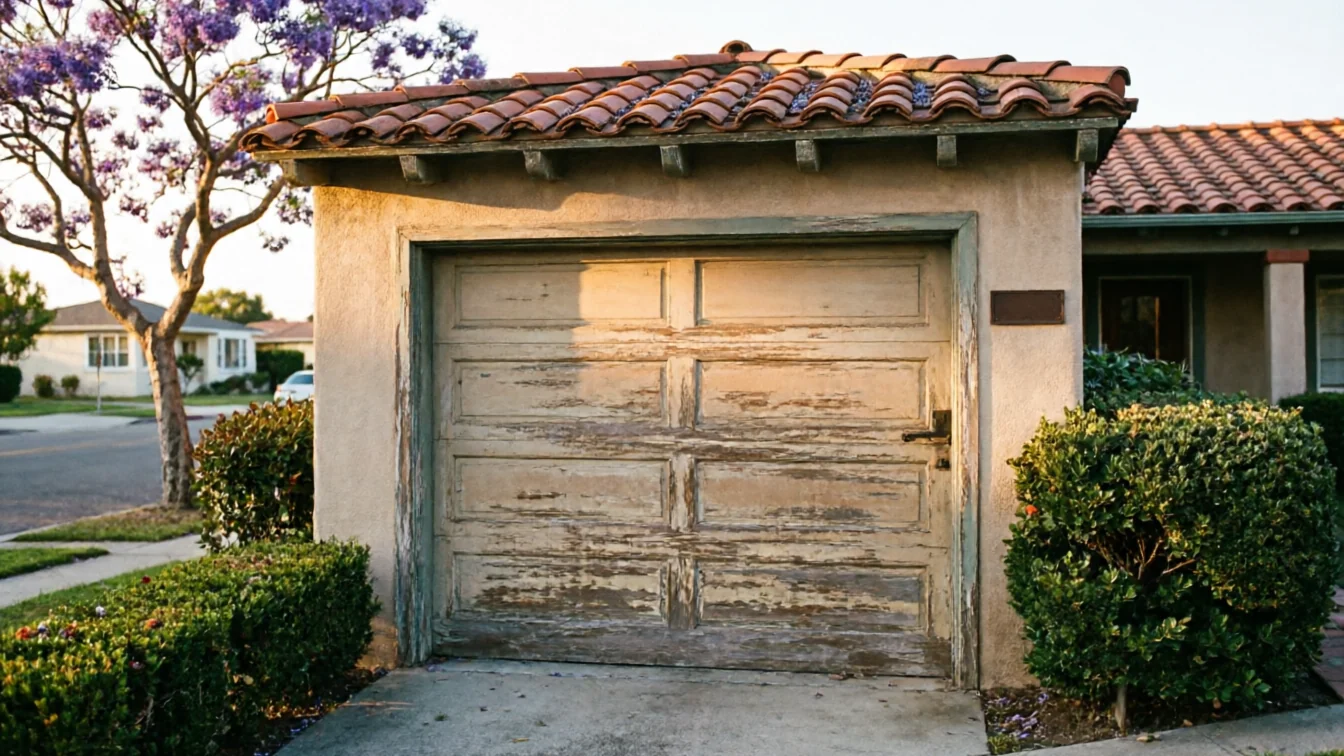 Detached and Attached Garage Doors Age Differently Here in Yorba Linda
Most Yorba Linda homes date to the 1960s and 70s, and whether your garage is attached or detached changes how it ages in our mild year-round climate here.
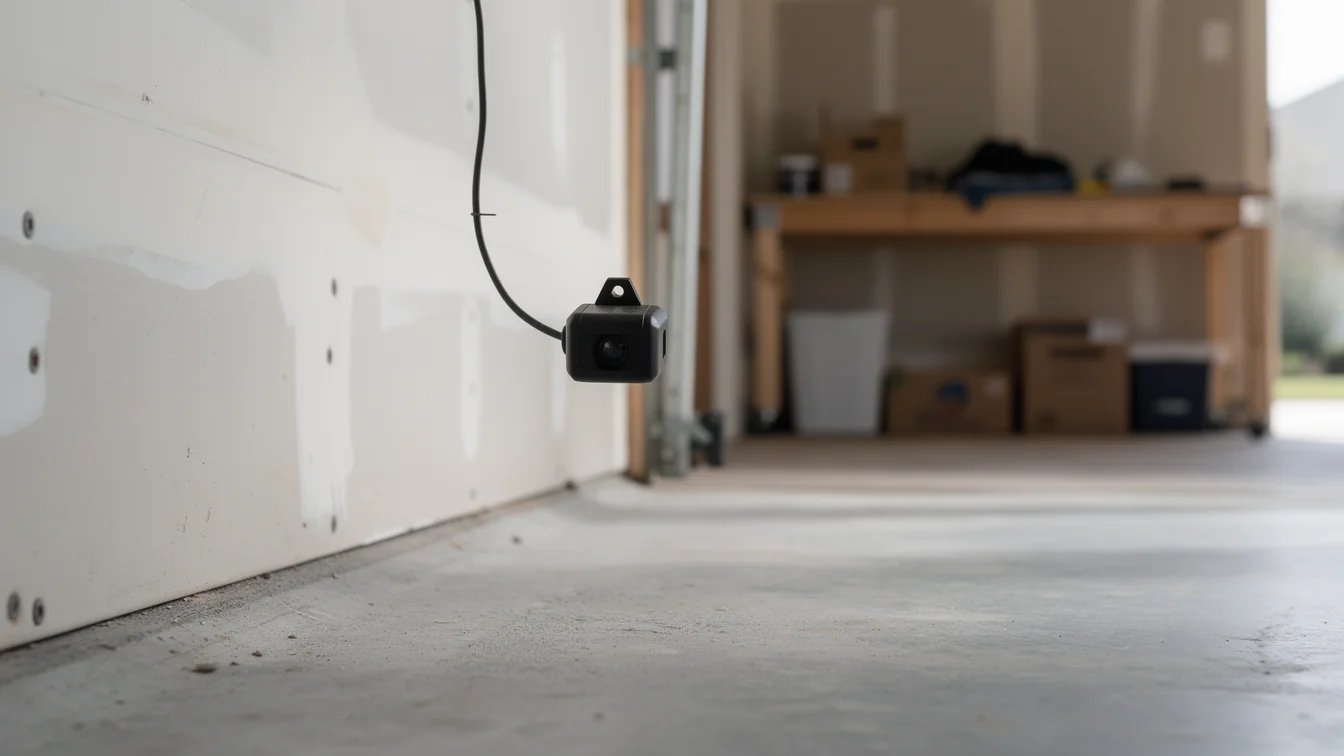 What a Yorba Linda Garage Door Actually Costs to Fix
What drives garage door repair cost in Yorba Linda, how the area's mild climate wears on tracks and seals, and when a stuck or noisy door means call now, not later.
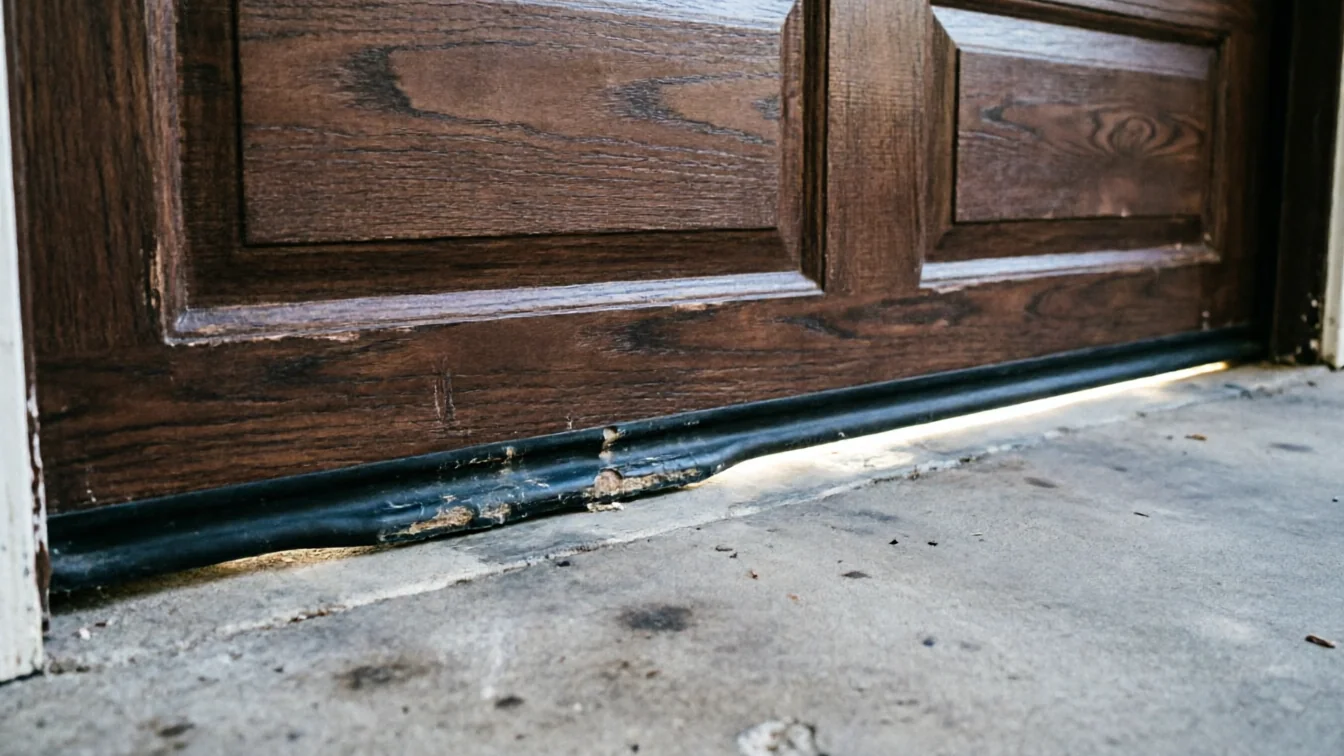 What a New Garage Door Costs in Yorba Linda
What a new garage door actually costs in Yorba Linda, why older openings don't match today's standard sizes, and how the mild climate here changes what wears out first.
Ready when you are
Need a garage door sorted in Yorba Linda?
Yorba Linda Garage Door Pros repairs and installs garage doors, springs and openers in Yorba Linda, CA and the surrounding area.