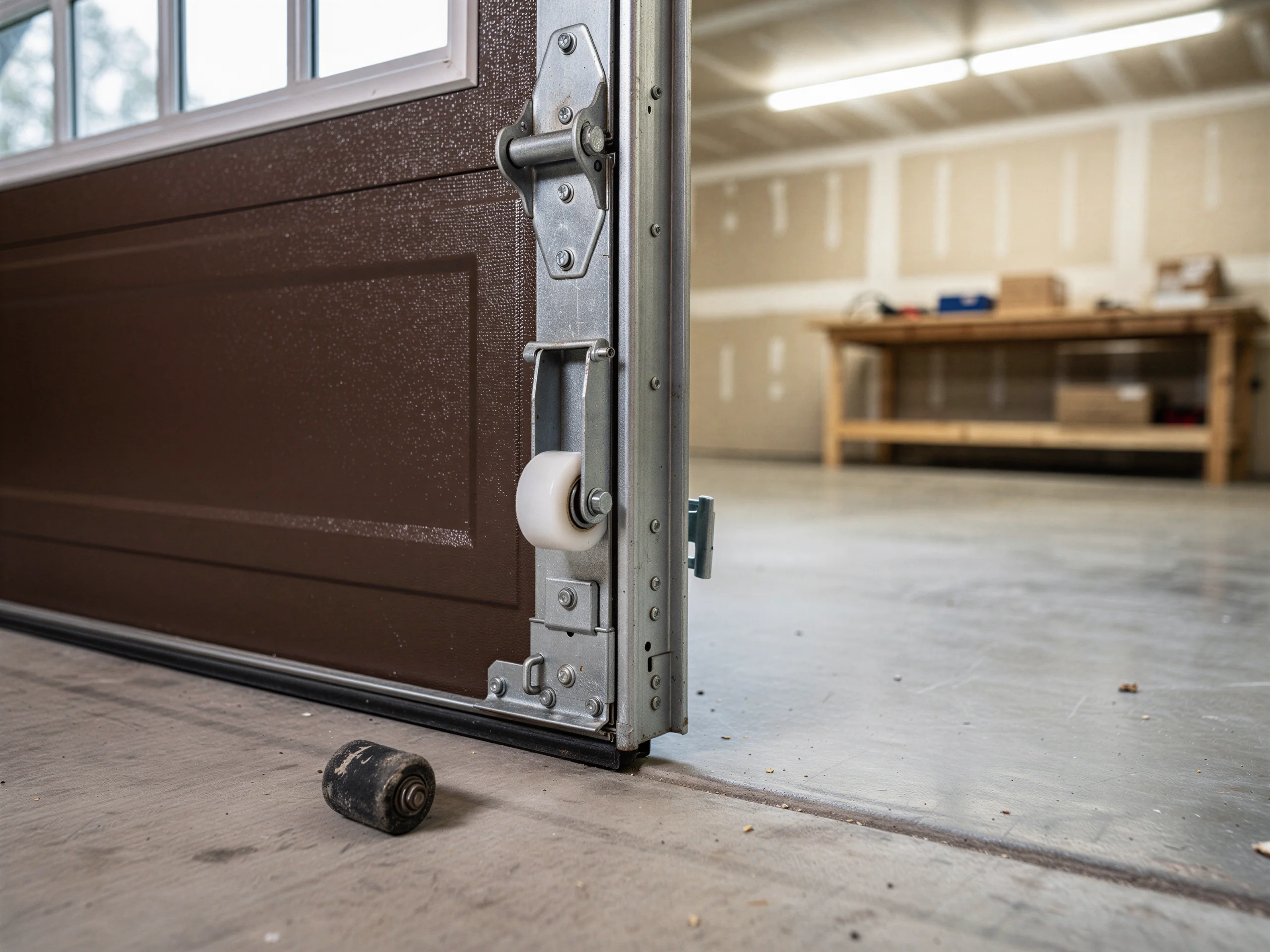
Housing across the service area runs from 1938 to 2007, with a median build year of 1968, and most of the stock in the named communities is concentrated in that 1960s-and-70s window. Doors installed or replaced during that era were almost universally fitted with steel rollers on steel track - nylon rollers weren't standard equipment yet. Steel-on-steel wears differently than modern nylon: the roller itself doesn't flex, so all the wear transfers to the stem, the bearing, and the track groove.
The region sits in a mild temperate climate band, which actually works against obvious failure here. There's no hard freeze to crack a bearing seal overnight and no monsoon humidity to swell wood jambs, so rollers degrade slowly and quietly - a little more noise each month, a little more drag - rather than failing all at once. Owners tend to live with a grinding door for a year or two because nothing forces the issue.
That slow-fail pattern is the actual local story: it's not a weather event, it's decades of steel-on-steel wear in houses built before nylon rollers were common, running long past the point a newer door would have already been serviced.