Blog
What That Sound From Your Garage Door Is Trying to Tell You
In Yorba Linda, most garage doors date from the 1960s-70s housing boom. Here's how to tell a normal squeak from a sign your spring or opener is failing.
What It Costs
We can't give you a number over the phone, and we won't pretend otherwise. A chirping roller might mean fifteen minutes with a grease gun. A grinding opener gear or a snapped torsion spring is a different job entirely, and the price depends on what's actually failed once we've got eyes on the door. What we can tell you is this: a lot of the doors we look at in Yorba Linda are original to houses built in that 1960s-70s wave, which means the hardware inside is often older than the homeowner calling us. Original torsion springs and track brackets from that era aren't always a straight parts swap - sometimes the spring is a stock size, sometimes it isn't, and that affects both the wait and the bill. The honest limitation here: if your opener is from that same build era and the logic board is failing, we may not be able to get a matching replacement part quickly, and replacing the whole unit ends up being the faster, more sensible move. We'd rather tell you that up front than quote a repair we can't actually deliver on schedule.
What the Weather Here Does to It
Yorba Linda sits in a mild temperate band - no hard freezes, no deep cold snaps that make steel brittle and springs snap on a January morning the way they do in colder parts of the country. That's good news for your hardware. It means when a door here starts making noise, it's almost never a weather event doing the damage. It's wear, plain and simple: a roller bearing that's run dry, a spring that's cycled tens of thousands of times since the house was built, a track bolt that's worked loose over years of use. Because the climate isn't stressing the metal the way freeze-thaw cycles do elsewhere, a door here can run quietly for a long time and then start making noise fairly suddenly once a part crosses its wear threshold - there's less gradual warning than you'd get in a climate that's hard on hardware year-round. That's part of why a new noise on an older door deserves attention rather than a shrug. It's not the weather talking. It's the part itself telling you it's close to done.
When to Get Help
Some noise is normal - a worn nylon roller squeals, and lubrication or a roller swap handles it. Other noise means stop using the door and call. A loud bang from inside the springs, a popping sound as the door moves, or a grinding noise from the opener head are all different signals, and on a door from the 1960s-70s stock that makes up a lot of homes in this area, they usually point to original hardware finally giving out. A snapped torsion spring will often announce itself with a single loud bang, sometimes loud enough to hear from another room, and the door will feel heavy or refuse to open on the opener afterward. A cable that's starting to fray makes a different sound - a faint ticking or scraping as it runs over the drum - and that one you want caught before it fully lets go, because a cable failure under tension can cause the door to drop unevenly. If a door with original hardware from a 1960s-era build starts making a new sound you haven't heard before, treat it as information, not background noise.
What Is Going On
Across the 51 named areas that make up this part of the service territory, the housing stock mostly dates from the 1960s and 70s, with homes overall spanning 1938 to 2007. That spread matters for noise diagnosis, because the same sound can mean different things depending on the door's age. A metallic click on a door installed in the last decade is often just a sensor bracket needing a quarter-turn. The same click on a door original to a 1960s-era house can mean a bearing plate that's finally worn through after decades of cycles. With 260,106 owner-occupied houses across the broader service area, most of the doors we see fall somewhere in that range - old enough that original parts are reaching end of life, not so old that everything needs replacing at once. Rattling along the track usually means loose hardware, which is simple. A rhythmic thump once per rotation usually means a flat spot on a roller or a bent track section. Grinding from the opener itself is a motor or gear issue, and it tends to get worse, not better, with more use.
Questions
Common questions
My garage door makes a loud bang but still opens fine - is that a problem?
Yes. A loud bang, especially a single sharp one, is the classic sound of a torsion spring breaking. The door may still open on the opener for a short time because the opener can muscle through, but it's running without the spring's assistance, which puts extra strain on the opener motor and gears. Stop using it and get it looked at.
Why does my door only make noise sometimes?
Intermittent noise usually means a part that's worn but not failed yet - a roller bearing that only catches under certain temperatures or loads, or a cable strand that's fraying and occasionally rubs against the drum. Given the mild climate here, it's rarely weather causing the inconsistency. It's more likely a part on its way out.
Is a squeaky door always a spring problem?
No. Squeaking is most often a dry roller or hinge, especially on doors that haven't been lubricated in years. Spring problems tend to show up as banging, popping, or the door feeling noticeably heavier when you lift it manually. If lubrication doesn't quiet it down within a cycle or two, it's worth a closer look.
Recommendation
You Might Also Like
More garage door guides for Yorba Linda homeowners.
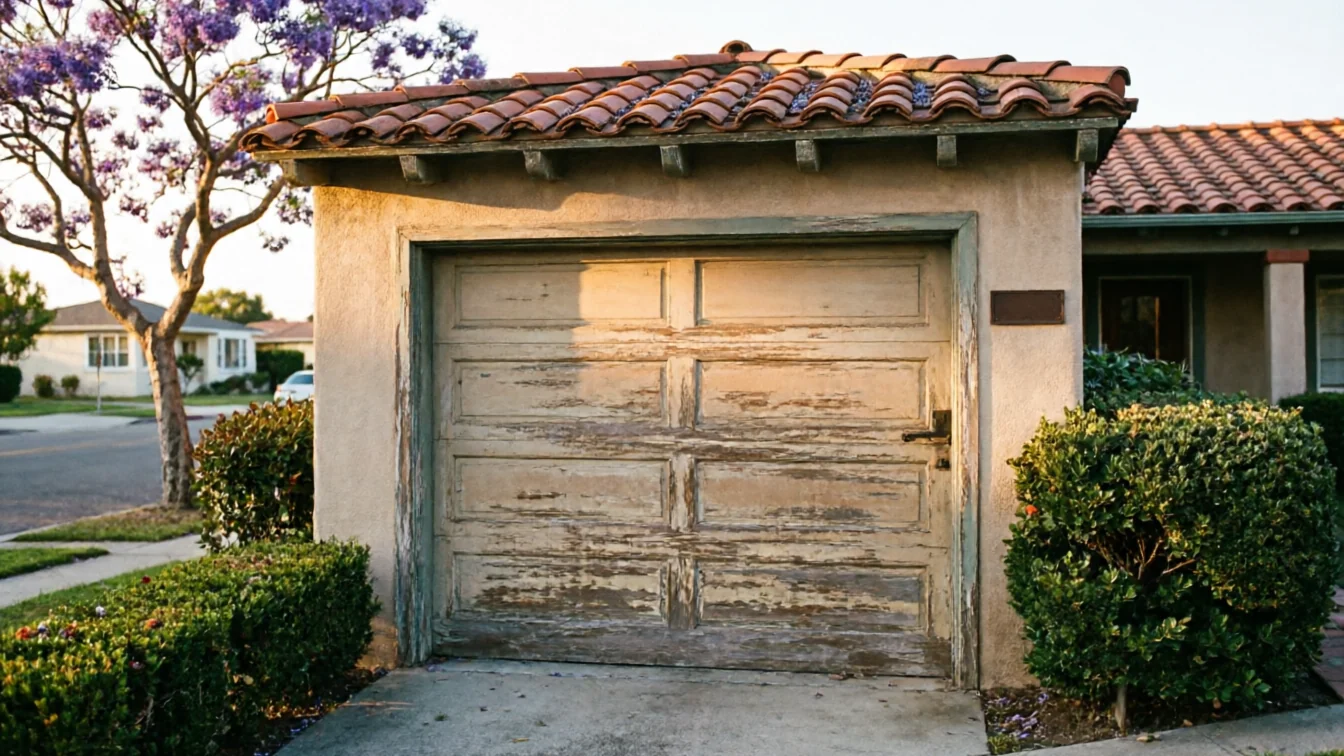 Detached and Attached Garage Doors Age Differently Here in Yorba Linda
Most Yorba Linda homes date to the 1960s and 70s, and whether your garage is attached or detached changes how it ages in our mild year-round climate here.
Openers and Power Cuts: What Yorba Linda Homeowners Actually Deal With
Garage door openers in Yorba Linda often date to houses built in the late 1960s.
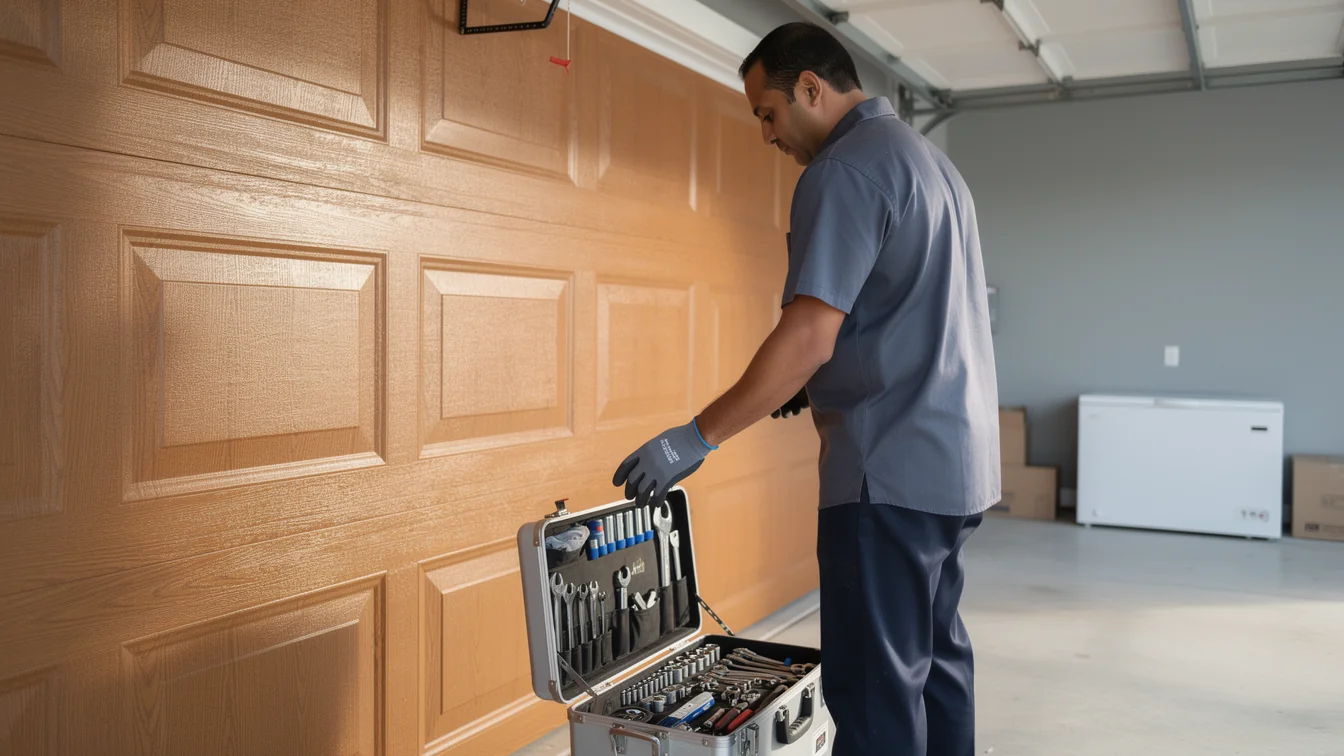 What a Service Call Actually Covers in Yorba Linda
What a garage door service call in Yorba Linda actually involves, from diagnosis to parts, and why 1960s-2000s housing stock here changes the job.
Ready when you are
Need a garage door sorted in Yorba Linda?
Yorba Linda Garage Door Pros repairs and installs garage doors, springs and openers in Yorba Linda, CA and the surrounding area.